A 2013 Interview with Danny Brown
Plus, Nosaj Thing's New Kingdom and more outtakes from “How Bay Area Hip-Hop Found Its Sound in the 1980s”

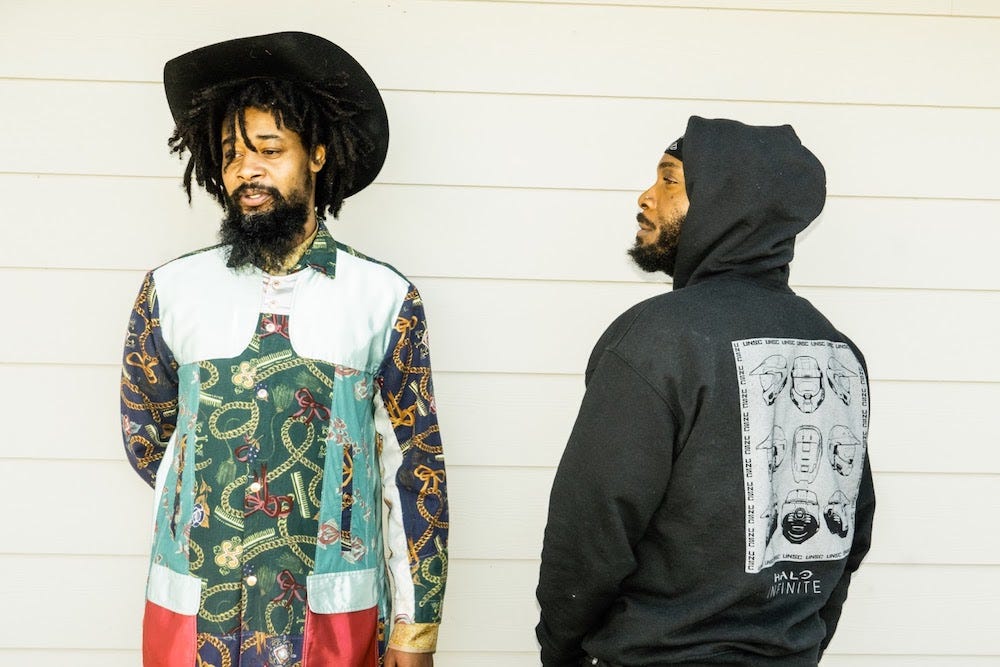
Danny Brown’s Scaring the Hoes
The May 2023 issue of The Wire includes two new pieces from me.
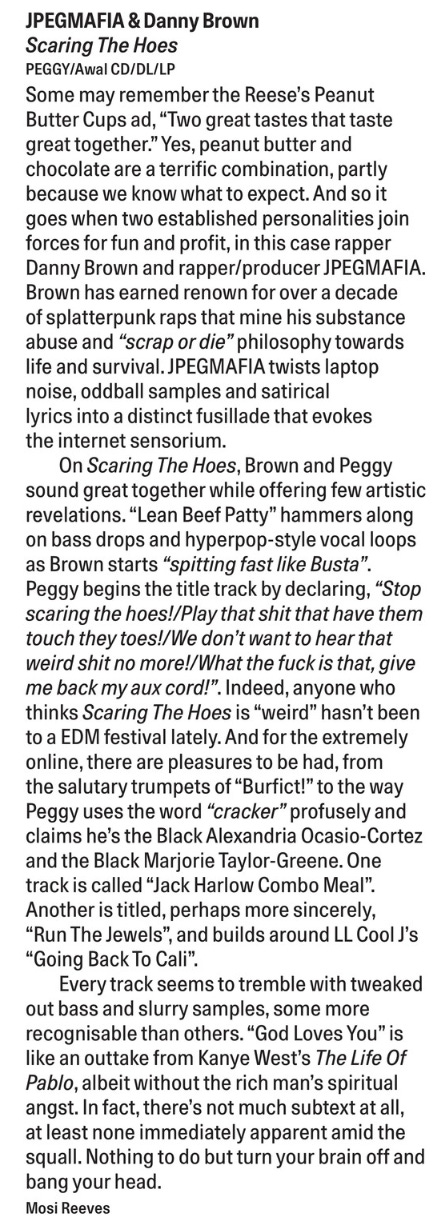
First is a review of JPEGMAFIA and Danny Brown’s Scaring the Hoes. Since the magazine is only available via print or subscription, here’s a clip of my review. I wasn’t super impressed with the album, but it was fun to listen to.
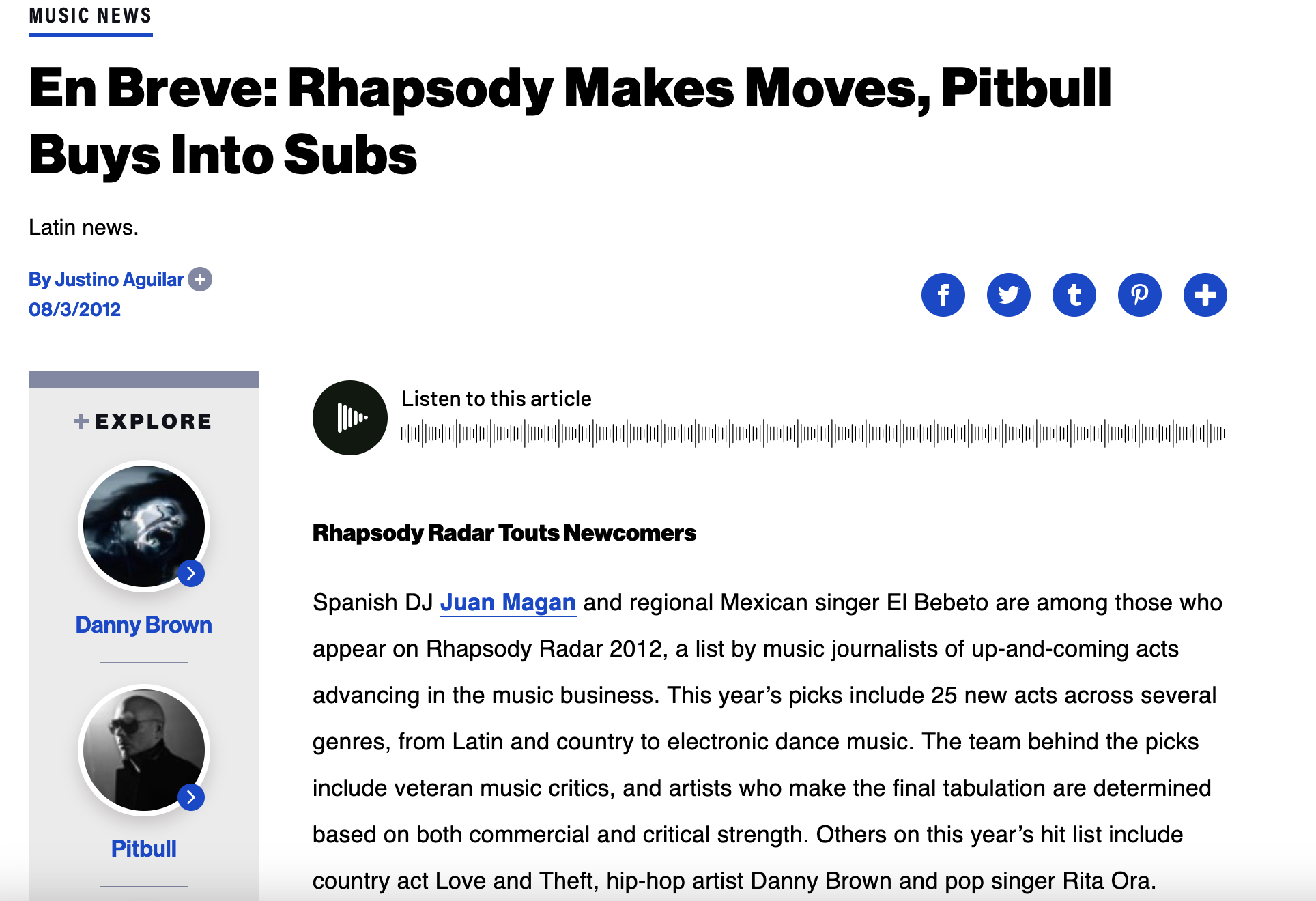
In the early 2010s, I wrote a bit about Danny Brown for Rhapsody (which merged with Napster in 2016.) Here’s a Billboard news item for “Rhapsody Radar,” a 2012 feature that included my short piece on Brown. Alas, the actual story is unavailable, even on the Internet Archive (blame Adobe Flash).
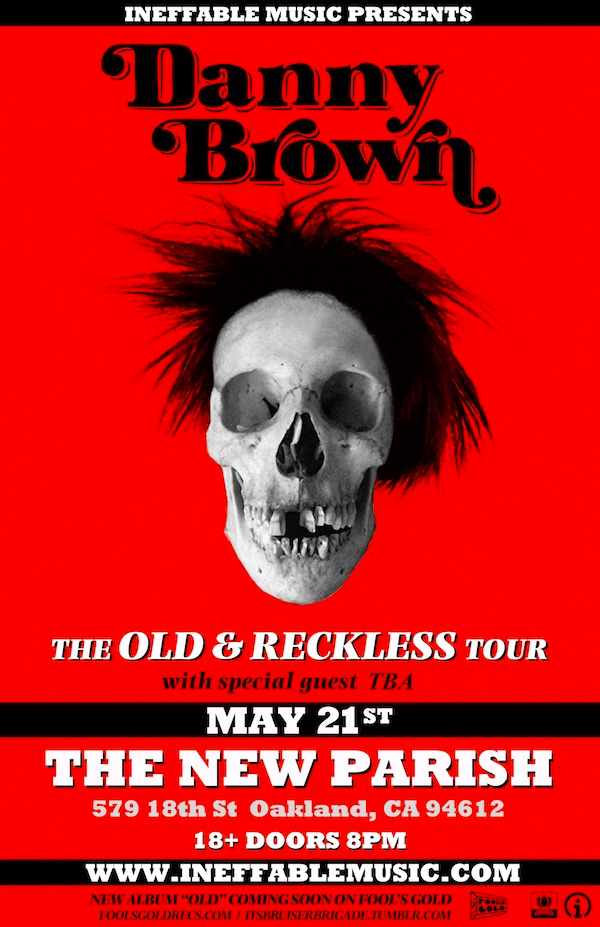
On May 21, 2013, I saw Danny Brown perform at the New Parish. L.A. group Overdoz. was the opener.
Later that year, I accompanied a Rhapsody team to Rock the Bells X, which took place September 14 and 15 at the Shoreline Amphitheater in Mountain View, California. We interviewed several musicians during the two-day festival, generating material for short “On the Record” clips posted on Rhapsody.com and YouTube. One of them was Danny Brown. We interviewed him on September 15, and he talked a lot about his forthcoming album, Old. Unfortunately, we ran around so much that day that I didn’t get a chance to see any of his performance.
Below is an unedited transcript from the video. It only includes his responses to my questions. However, I remember asking Brown why he didn’t perform introspective material like “Scrap or Die” and “30” during that New Parish show. (“I’m not gonna make songs…for you to listen to in your headphones and perform [those],” he responded.)
I also recall DJ and producer Skywlkr being in the room. I showed him how to use the Rhapsody app. Keep in mind that this is a few years before Spotify and Beats 1/Apple Music led the U.S. music industry to convert to a streaming-centered business model. Most people didn’t understand or use streaming services like Rhapsody at the time.
The album is called Old. It comes out September 30. And, um, it features Purity Ring, Charlie XCX, Ab-Soul, Schoolboy Q, A$AP Rocky, Freddie Gibbs, Skywlkr did production, Paul White, Rustie, Oh No, and Frank Dukes and A-Trak.
Purity Ring, I wanted to work with them. Charlie XCX, I wanted to work with her. But, like, Q and Ab-Soul and Rocky, you know, hearing the songs, you know, and they were like, “Let me get on that!” You know, so, it was, like, that was tight, so yeah.
I took two years to make it and I missed a lot of sleep over it. (chuckles) So hopefully people like it. Whereas XXX was the present, this one is going past and future, so it’s pretty much telling you how I got to the point of being where XXX was at and where I want to go after that. Previous projects, I didn’t have no money but I had all the time in the world, so I’d make up these false imaginary dates ‘cause, like, I wouldn’t eat if I don’t get this album out, like, I gotta hurry up and get this album or ain’t going to, I gotta make some money, you know? But with this album it was, like, I was good. I could just take my time and just let the music come to me without forcing to make anything, you know? And that’s what I did.
I don’t make music with my ears, I make it with my heart. So it takes me a minute to feel or in some sense it take me a minute because I write about what I go through so it’s, like, I have to live life to have something to write about.
I structure my albums from, like, when I was a kid still listening to tapes or listening to vinyl. It’s a side A and it’s a side B. I can make so many different types of style of music it’s hard to try to put that all into one project, so you gotta try to find a line somewhere where I can draw, you know, to show people what’s the separate side, so I think with every project that’s how I’m going to make them, you know, because you get that backpack, underground, like, you say, battle rap shit from me, then you can get the emo turn-up shit from me, too. So, you know, I’m not one of those things. I’m all of them, you know, and my personality as well, so it reflects in my music, you know.
A lot of artists probably make songs for the radio or make songs for the clubs; where I make my albums but then I make songs to perform. So I make performance-based music, you know what I’m saying? That’s the only reason why I have that song is for me to perform it for people, you know? So if I made songs to perform, I’m gonna perform those. I’m not gonna make songs that I made for you to listen to in your headphones and perform [those]. I’d rather for my performances to feel more like a party than a rap show, man. Like, I don’t really like going to rap shows, you know? So I don’t want to play a rap show.
My biggest influence in Detroit was the White Stripes. Not necessarily bringing the element of his music, but what he stood for, you know? Like, I look at somebody like Jack White, like, his whole influence was, like, blues and, you know, shit like that, and then he made the most minimal rock you can probably make but he took it to stadiums. And that’s what I want to do with rap, you know, where I’m doing, like, the most minimal form of rap music. I’m not bringing in, like, no orchestras or doing no crazy Kanye stuff, you know. But that shit can still rock off in the stadium, you know?
Nosaj from New Kingdom’s House of Disorder
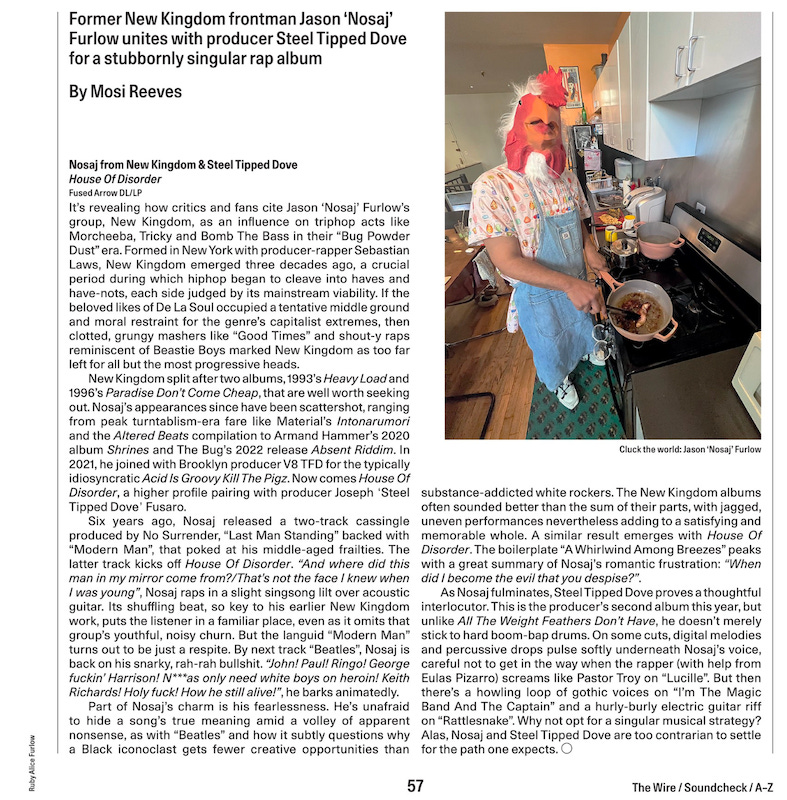
In The Wire’s May 2023 issue, I also wrote a lengthy review of Nosaj from New Kingdom’s collaboration with producer steel tipped dove, House of Disorder.
After giving House of Disorder a first listen, I did a little bit of research before writing the review. First, I went back to his two albums with New Kingdom, Heavy Load and Paradise Don’t Come Cheap. They were briefly available on streaming last year but have since been taken down. Luckily, I have both on compact disc.
I also stumbled onto a 1993 news item about Heavy Load in CMJ New Music Report as part of my research for “The 125 Best Rap Singles of 1993,” a list I published March 28 on my website, Humthrush.com. Note that Jason “Nosaj” Furlow’s name is misspelled as “Nasoj.”
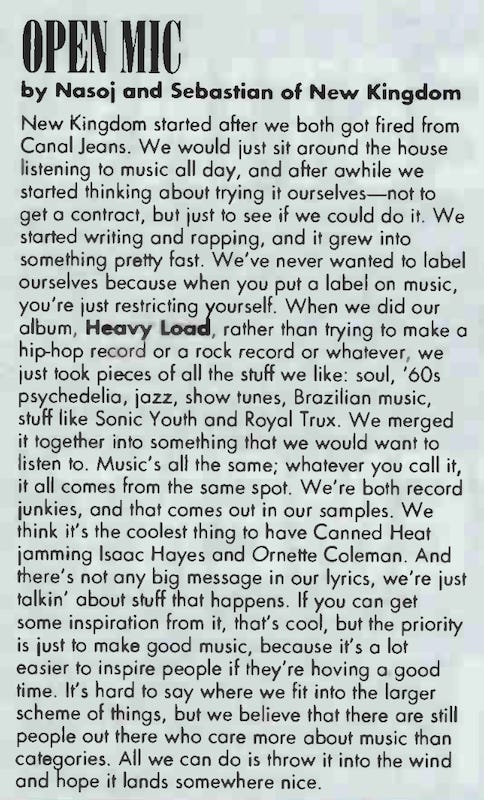
Finally, I read Phillip Mlynar’s Bandcamp story, “How Jason Furlow Became One of The Forefathers of Trip-Hop.”
Notes on Bay Area Rap
On April 5, KQED published my 6000-word story on the early history of Bay Area rap: “How Bay Area Hip-Hop Found Its Sound in the 1980s,” as part of “That’s My Word,” its yearlong series on the region that coincides with the 50th anniversary of hip-hop. It focuses on the years 1981 to 1988. Here’s some unused material from my reporting.
Phavia Kujichagulia
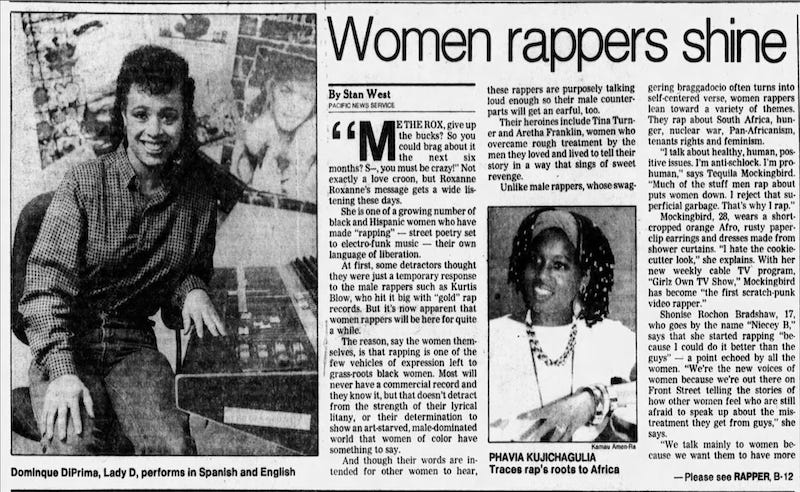
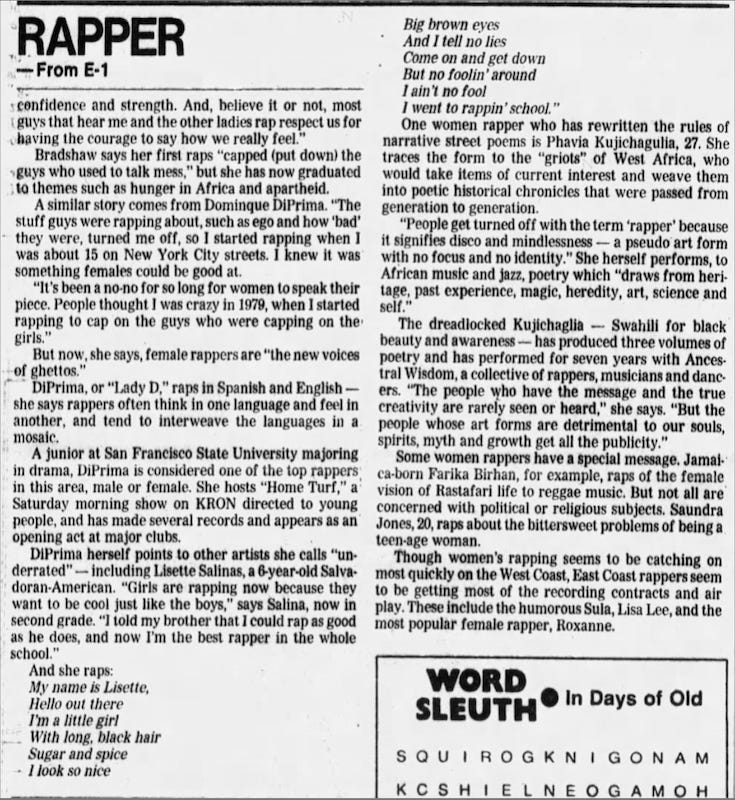
One artist that didn’t fit into the story is Phavia Kujichagulia. She’s a multidisciplinary Oakland artist who uses spoken word, jazz, Afro-Caribbean, and reggae in her performances. However, Pacific News Service writer Stan West included her in a piece on women “rappers” in 1985.
Here’s “Fancy Footwork,” a jazzoetry track Kujichagulia made for the 1987 Bay Area compilation Frontliners ‘87. Her song begins at the 5:45 mark in the album-length video.
BAM Magazine
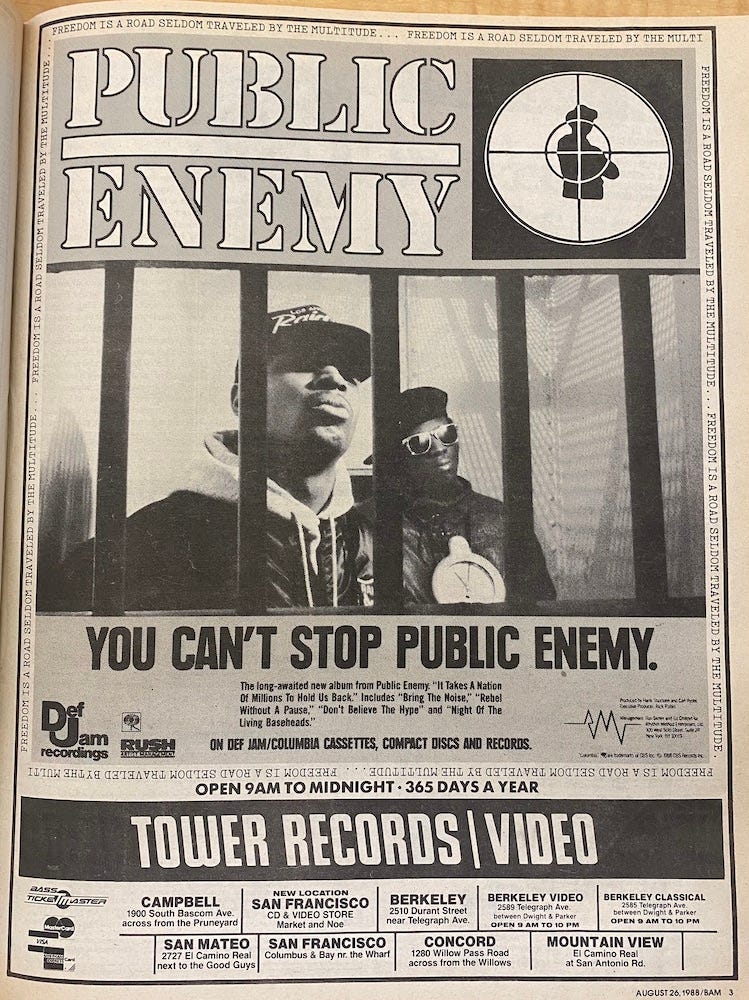
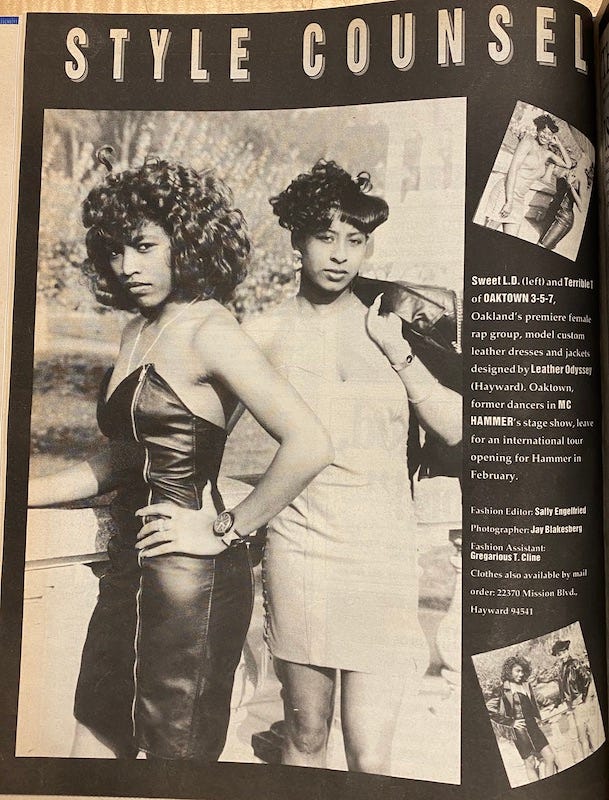
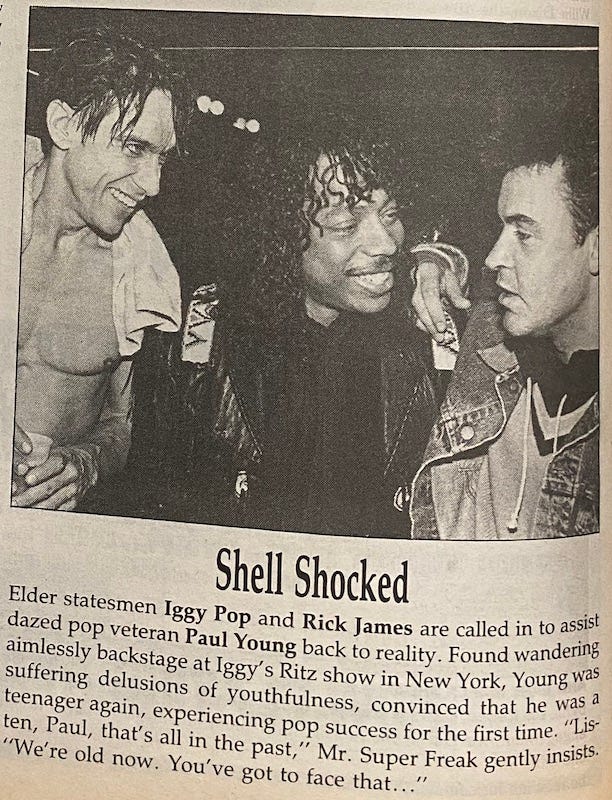
Part of my research included reading old issues of the now-defunct BAM magazine. Here’s a few images. Apologies in advance for the off-center photographs.